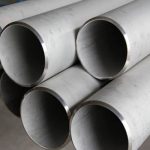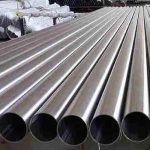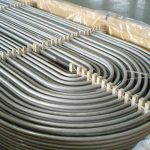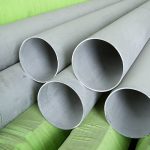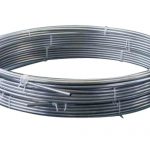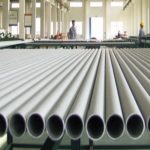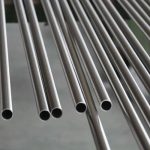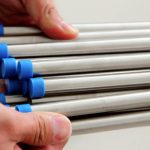
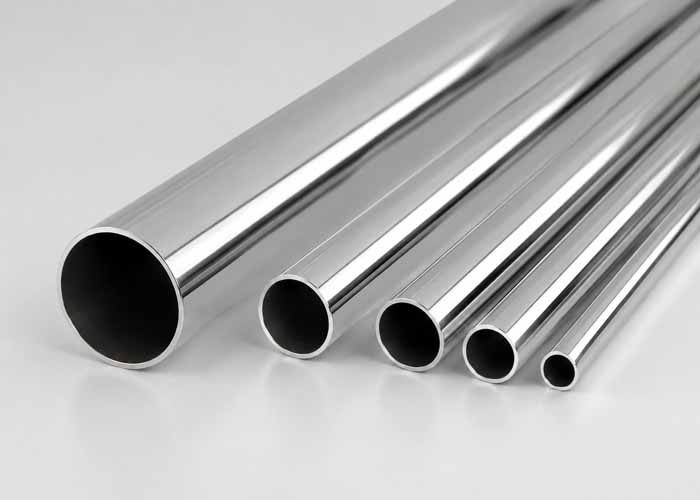
316L Electropolished (EP) Stainless Steel Tube for Semiconductor & High-Purity Systems
316L electropolished stainless steel tube, commonly known as EP tube or EP tubing, is designed for high-purity and ultra-high-purity fluid handling systems where internal surface condition, cleanliness, corrosion resistance, dimensional consistency, and contamination control are critical.
Compared with conventional stainless steel tubing, the internal surface of EP tubing undergoes a controlled electropolishing process to improve surface smoothness and remove microscopic surface irregularities and contaminants.
Our 316L EP tubes can be supplied according to project-specific requirements for semiconductor manufacturing, high-purity gas delivery, high-purity chemical distribution, pharmaceutical processing, biotechnology, laboratory systems, and other critical fluid applications.
For semiconductor applications, tubing material and wetted-surface requirements may be specified in accordance with relevant SEMI requirements such as SEMI F20 and SEMI F19. ASTM A269 covers seamless and welded austenitic stainless steel tubing for general service.
What Is an Electropolished EP Tube?
An EP tube is stainless steel tubing whose internal surface, and where required the external surface, has been treated by electropolishing.
Electropolishing removes a controlled microscopic layer from the stainless steel surface. The process reduces microscopic peaks and irregularities and produces a smoother process-contact surface.
For high-purity piping systems, surface condition is important because the tubing may transport sensitive gases, chemicals, purified water, pharmaceutical media, or other process fluids.
316L stainless steel is widely specified for high-purity semiconductor components and tubing. SEMI F20 specifically addresses 316L stainless steel tubing and other product forms used for general-purpose and high-purity semiconductor chemical distribution systems.
316L EP Tube Specifications
| Artikel | Available / Recommended Specification |
|---|---|
| Produkt | Electropolished Stainless Steel Tube / EP Tube |
| Material | Edelstahl 316L |
| UNS | S31603 |
| EN Material | 1.4404 |
| Tube Type | Seamless / Welded, subject to order requirements |
| Oberfläche | Electropolished (EP) |
| Internal Surface | Electropolished |
| External Surface | Bright Annealed / Polished / Electropolished as specified |
| Surface Roughness | According to customer specification and application |
| Standards | ASTM A269 / ASTM A270 / applicable SEMI or ASME BPE requirements |
| Außendurchmesser | According to production range |
| Wandstärke | According to production range |
| Länge | Straight length or project-specific length |
| Inspektion | Dimensional, surface, roughness and material verification as specified |
| Documentation | Material certificate and inspection documents as ordered |
| Verpackung | End protection and clean packaging according to purity requirements |
Important: Final dimensions, surface roughness, inspection requirements, cleanliness level and applicable standards should be defined in the purchase specification.
ASTM A269 covers nominal-wall-thickness seamless and welded austenitic stainless steel tubing for general corrosion-resistant and temperature service, while ASTM A270 specifically covers stainless steel sanitary tubing with special surface finishes.
Surface Finish and Roughness
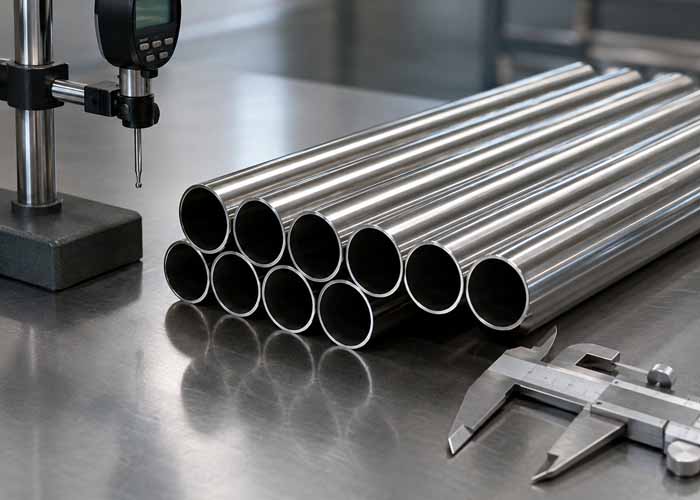
Surface finish is one of the most important purchasing parameters for electropolished tubing.
Instead of specifying only “EP finish,” buyers should define the required internal surface roughness and inspection criteria.
Typical purchase specifications may include:
| Requirement | What Buyers Should Specify |
| Surface Treatment | Electropolished |
| Surface Location | ID only or ID + OD |
| Surface Roughness | Maximum Ra value |
| Measurement | Instrument and sampling requirements |
| Visual Inspection | Acceptance criteria |
| Surface Chemistry | When required for critical service |
| Cleaning | Cleaning procedure |
| Drying | Drying and purge requirements |
| Verpackung | Single or double clean packaging |
| End Protection | Caps or other sealed protection |
For semiconductor applications, SEMI F19 defines requirements associated with the wetted surface condition of stainless steel components manufactured from materials covered by SEMI F20.
EP Tube vs. BA Tube
Both EP tubing and BA tubing are used in clean and high-purity systems, but they describe different finishing processes.
| Merkmal | EP Tube | BA Tube |
| Full Name | Electropolished Tube | Bright Annealed Tube |
| Main Process | Electropolishing | Bright annealing |
| Internal Surface | Electropolished | Bright annealed |
| Surface Control | Suitable for more demanding surface-finish requirements | Suitable for many clean industrial applications |
| Typical Selection | High-purity / ultra-high-purity systems | General clean and high-purity systems |
| Semiconductor Use | Frequently specified for critical gas or chemical lines | Used depending on system purity requirements |
The correct choice should be based on the required surface roughness, cleanliness specification, process media and customer standard rather than simply choosing EP or BA by name.
Applications of Electropolished Stainless Steel Tubing
1. Semiconductor Manufacturing
One of the most important applications for 316L EP tubing is semiconductor manufacturing.
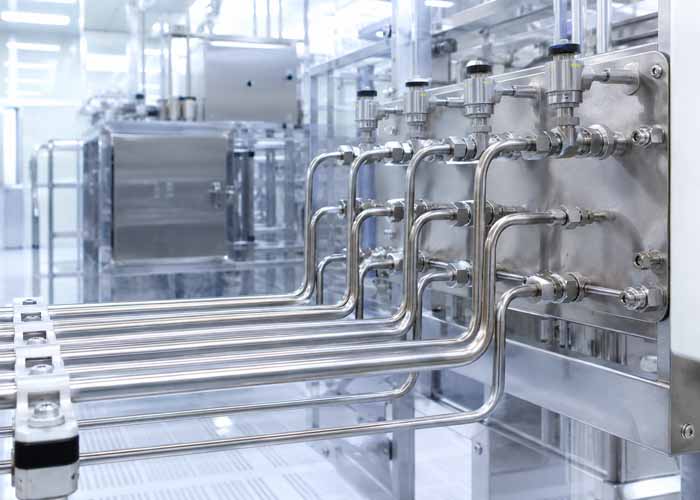
Modern semiconductor facilities use extensive piping networks to transport process gases and chemicals. Tubing used in these systems may require strict control of material composition, internal surface condition, cleanliness and welding quality.
Typische Anwendungen sind:
- Ultra-high-purity gas delivery systems
- Specialty gas lines
- Process gas distribution
- Chemical distribution systems
- Valve manifold box connections
- Gas cabinets
- Process equipment connections
- Wafer fabrication facilities
- Cleanroom utility systems
SEMI F20 specifically covers 316L stainless steel tubing used in components for general-purpose and high-purity chemical gas or liquid distribution systems in semiconductor manufacturing facilities.
2. High-Purity Gas Systems
316L electropolished tubing can be used for transporting gases where system cleanliness and surface condition are important.
Typical systems include:
- High-purity process gases
- Specialty gases
- Analytical gases
- Laboratory gases
- Instrument gas systems
- Controlled-atmosphere processing systems
For these projects, buyers commonly evaluate not only material grade but also internal roughness, cleanliness, dimensional tolerance, welding compatibility and packaging.
3. High-Purity Chemical Distribution
Electropolished tubing is also used in chemical delivery systems where surface quality and contamination control are important.
Typische Anwendungen sind:
- High-purity chemical transfer
- Chemical distribution skids
- Process chemical lines
- Chemical delivery equipment
- Semiconductor wet-process systems
- Precision chemical dosing systems
Material compatibility must always be evaluated against the actual chemical, concentration, temperature and operating conditions.
4. Pharmaceutical and Biotechnology Processing
Electropolished stainless steel tubing is widely considered for hygienic process systems where cleanability and controlled internal surfaces are important.
Typische Anwendungen sind:
- Pharmaceutical processing equipment
- Biotechnology processing systems
- Purified water systems
- Process fluid transfer
- Clean utility piping
- Sterile process equipment
For bioprocessing projects, purchasers may specify ASME BPE requirements. ASME BPE includes requirements and acceptance criteria related to metallic process-contact surface finishes and electropolished surfaces.
5. Food and Beverage Processing
Where sanitary tube requirements apply, electropolished stainless steel tubing may be specified for:
- High-purity beverage processing
- Food processing systems
- Clean liquid transfer
- Dairy equipment
- Sanitary process piping
ASTM A270 covers seamless, welded and heavily cold-worked stainless steel sanitary tubing intended for sanitary service and includes requirements associated with special surface finishes.
6. Laboratory and Analytical Systems
Small-diameter EP tubing can be used in precision laboratory and analytical systems where clean fluid pathways are required.
Applications may include:
- Analytical instrumentation
- Laboratory gas lines
- Research equipment
- Sample delivery systems
- Precision fluid control
- High-purity testing systems
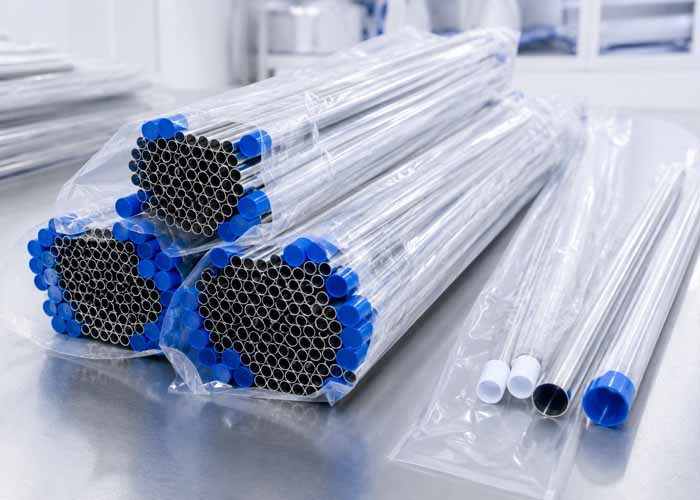
Clean Packaging for EP Tubes
Packaging is especially important for high-purity and ultra-high-purity tubing.
After final cleaning and inspection, tubing should be protected against contamination during storage and transportation according to the agreed project cleanliness level.
Depending on the specification, packaging requirements may include:
- Protected tube ends
- Individual tube packaging
- Clean polyethylene bags
- Double-bag packaging
- Controlled handling
- Identification outside the clean package
- Export-protective outer packaging
The exact cleaning and packaging procedure should always be confirmed before order placement.
Request 316L Electropolished EP Tubing
If you are sourcing 316L electropolished stainless steel tubing for semiconductor, high-purity gas, chemical, pharmaceutical or precision fluid systems, send us your drawings, specifications or purchasing list.
Please include the required dimensions, surface roughness, applicable standard, quantity and cleanliness requirements so that we can evaluate the correct production and inspection route for your project.